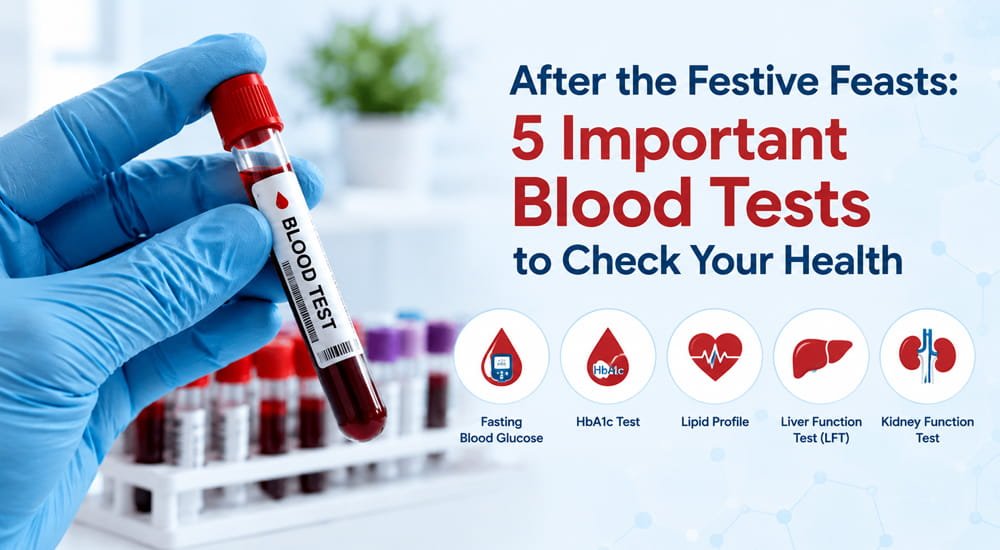
After the Festive Feasts: 5 Important Blood Tests to Check Your Health
Posted By Suborna Fermi
Posted on Nov 19, 2026
Delicious food is often at the heart of every celebration. From rich gravies and fried snacks to traditional sweets and sugary drinks, festive menus offer plenty of temptation. A few days of indulgence may not cause lasting harm for most healthy people, but when heavy meals, irregular eating habits and reduced physical activity become frequent, it's worth paying attention to your health.
Once the celebrations settle down, consider reviewing your health with a qualified healthcare professional. Certain blood tests can provide useful insights into blood sugar, cholesterol, liver and kidney function. Remember, testing isn't about feeling guilty after enjoying festive food. It's about understanding your health and making informed choices.
Why Consider Blood Tests After Festive Eating?
Changes in diet and routine can influence health, particularly in people who already have diabetes, high cholesterol, high blood pressure or other medical conditions. Some health concerns may also develop without obvious symptoms.
A suitable health assessment can help identify abnormal results, monitor existing conditions and guide further medical advice. However, a few festive meals alone do not mean you need every available blood test. Your age, symptoms, medical history and risk factors should determine what is appropriate.
5 Blood Tests Worth Discussing with Your Doctor
1. Fasting Blood Glucose
Have you been enjoying sweets and desserts more often than usual? If you have diabetes risk factors, a fasting blood glucose test may help assess your blood sugar level. The test measures glucose after a period of fasting and can help screen for or monitor diabetes.
2. HbA1c Test
Unlike a single glucose reading, the HbA1c test estimates your average blood sugar over the previous two to three months. It is useful for diagnosing diabetes and monitoring long-term glucose control. Your doctor may recommend it if you have diabetes or are at increased risk.
3. Lipid Profile
Fried snacks, creamy dishes and foods high in saturated fat can contribute to unhealthy eating patterns. A lipid profile measures total cholesterol, LDL cholesterol, HDL cholesterol and triglycerides. These results help assess your risk of cardiovascular disease.
4. Liver Function Test (LFT)
The liver performs several essential functions, including processing nutrients and producing important proteins. An LFT measures certain enzymes and proteins that help assess liver health. It may be recommended if you have relevant symptoms, medical history or risk factors.
5. Kidney Function Test
Kidney function tests, including serum creatinine and estimated glomerular filtration rate (eGFR), help evaluate how well your kidneys filter waste from the blood. They are particularly relevant for people with diabetes, high blood pressure or existing kidney concerns.
How to Prepare for Your Blood Tests
Before visiting a diagnostic centre or booking home sample collection, check the preparation instructions for each test.
- Follow fasting instructions if required.
- Drink water unless advised otherwise.
- Inform the healthcare professional about your medicines.
- Avoid changing prescribed medication without medical advice.
- Share any existing health conditions or relevant symptoms.
Give Your Health a Fresh Start
Festive celebrations may last a few days, but healthy habits matter throughout the year. The right blood tests can help you understand important health indicators and identify concerns that need medical attention. Enjoy your favourite foods, return to balanced meals and make preventive healthcare part of your routine.

 Cart


 Cart